
PRIVATE 2-DAY PROGRAMME · GALWAY, IRELAND
Intensive Couples Therapy Retreat
in Ireland
Intensive Couples Therapy Retreat
in Ireland
Two days. One couple.
Time to understand what keeps you stuck.
Specialist therapy for couples in high conflict and relationships on the brink of separation.
Intensive Couples Therapy Retreat in Ireland
A private, bespoke two-day couples therapy programme in Galway
Taking place privately from my offices in Moycullen or, where appropriate, outdoors in a nature-based setting.
Sometimes one hour isn’t enough.
When a relationship has become stuck in recurring conflict, disconnection, betrayal or crisis, trying to unravel years of difficulty in a weekly 60-minute appointment can feel frustratingly slow. My private Intensive Couples Therapy programme offers something different: two focused days to understand what has happened between you, identify the cycle keeping you stuck, and begin learning how to interrupt it.
This is private, specialist couples therapy for one couple at a time — not a group retreat, workshop or generic relationship programme.
Two days. One couple. Time to understand what keeps you stuck.
Most couples who come to see me have already tried hard to resolve things themselves. They may have talked endlessly, promised to do things differently, read the books or already tried couples therapy, yet somehow find themselves returning to the same arguments and the same places of disconnection. The subject of the argument may change, but underneath it there is often a remarkably consistent pattern.
Understanding that pattern — and learning how to recognise and interrupt it — is at the heart of my work. Often, the relationship isn’t failing because two people don’t care about each other; they have become stuck in a cycle neither of them knows how to stop.
What is Intensive Couples Therapy?
Intensive Couples Therapy is an extended form of specialist couples therapy in which we work together over two focused days rather than relying exclusively on weekly appointments. It is also sometimes described as Marathon Couples Therapy, a Couples Therapy Retreat, Marriage Retreat, Couples Counselling Retreat, Couples Therapy Weekend or Intensive Marriage Counselling.
My programme is a private, bespoke therapeutic intensive designed around your relationship, taking place privately at my office in Moycullen, Galway, or, where appropriate, outdoors in a nature-based setting.
The work begins before you arrive. Both partners complete a comprehensive relationship assessment, including the Gottman Relationship Checkup, which I review carefully beforehand. By the time we meet, I will already have an intimate working knowledge of your relationship difficulties — including your strengths, areas of distress, recurring conflicts and some of the patterns that may be keeping you stuck. This means we don’t spend the first morning starting from zero.
Why choose Intensive Couples Therapy rather than weekly therapy?
Weekly couples therapy can be enormously helpful and is the right format for many relationships. For highly distressed or complex couples, however, an hour can sometimes be too short: just as we begin to reach what lies underneath an argument, the session ends. In some cases, weekly therapy can even become another place where the couple repeatedly rehearses the very cycle they are trying to escape — arriving activated, falling into the familiar conflict and leaving before there has been enough time to work through it.
Intensive therapy gives us the time to slow the relationship down. We can recognise the cycle, interrupt it, understand what lies beneath it, allow difficult emotions to settle and return to important material without being governed by the clock. In my experience, this concentrated format can create considerably more therapeutic movement for some complex and highly distressed couples than trying to accomplish the same work one hour at a time.
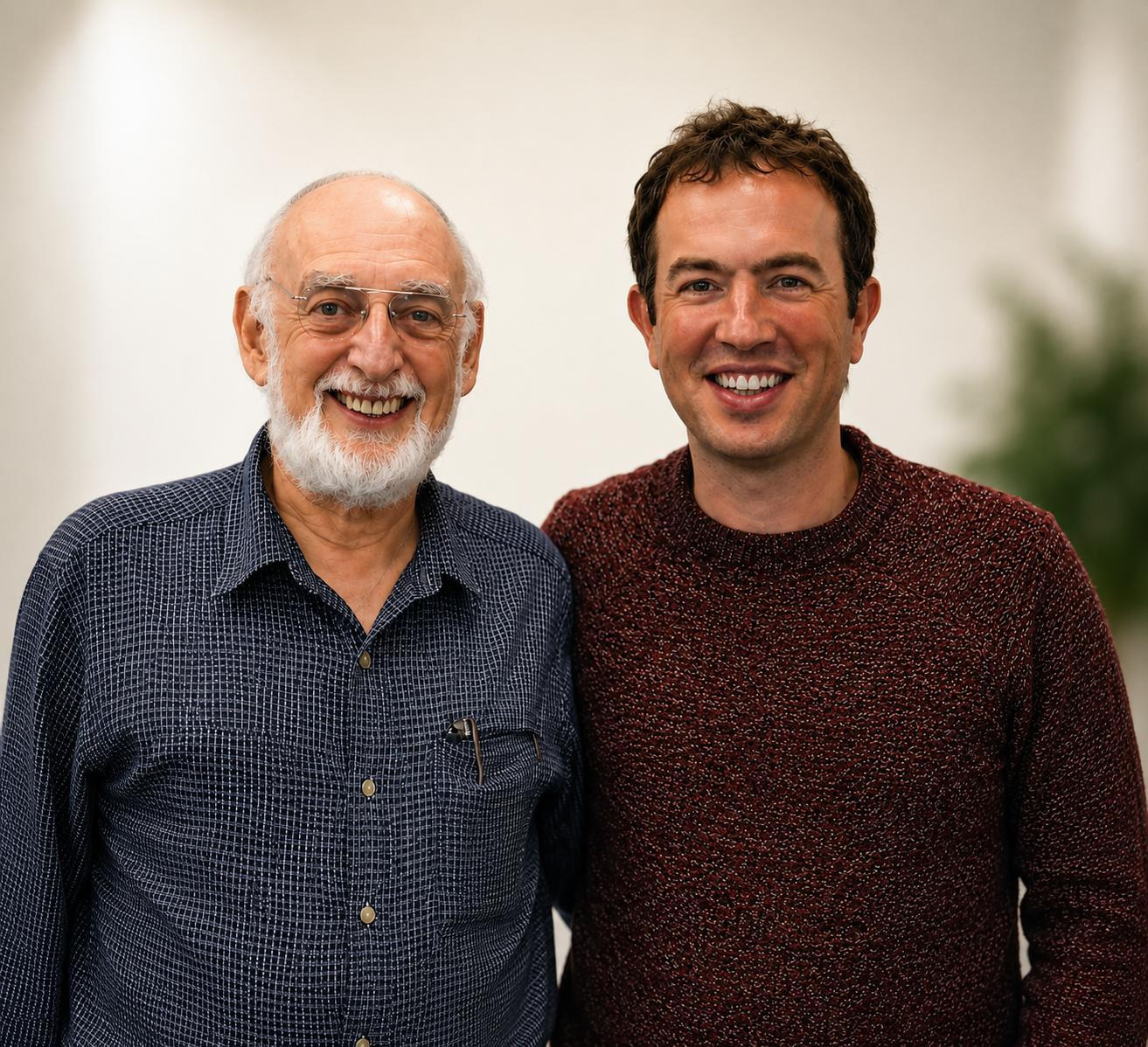
Ruairi training with Dr. John Gottman, Middle East, 2019
Who may benefit from Intensive Couples Therapy?
Intensive work can be particularly useful for:
- Couples on the brink of separation who need to understand whether — and how — their relationship might be repaired.
- Couples in an acute relationship crisis where waiting months for meaningful change doesn’t feel realistic.
- Couples trapped in recurring or escalating conflict and unable to find their way out of the same cycle.
- Couples recovering from an affair, infidelity or significant betrayal.
- Emotionally disconnected couples who function together but no longer feel like partners.
- Neurodivergent couples, including relationships involving autism, ADHD or both.
- Couples affected by trauma, attachment wounds or unresolved relationship injuries.
- Couples who have already tried weekly couples therapy but remain stuck.
- Time-sensitive couples facing an important life transition or decision.
- Couples during pregnancy or approaching parenthood who want to address significant difficulties before family life changes further.
- Busy professionals and parents for whom regular weekly appointments are difficult.
- Couples living internationally who want to travel for a focused period of specialist couples therapy.
Many couples who contact me are not experiencing mild relationship dissatisfaction. They are genuinely wondering whether their relationship will survive. Couples on the brink of separation are one of my particular areas of specialism.
This work is not for every couple
This work is designed for couples who are ready to engage seriously with what is happening between them. You do not need to have the answers, feel equally hopeful or know whether the relationship can be repaired. You do, however, both need to be willing to participate honestly, look beneath the immediate arguments and become curious about the pattern you are creating together.
An intensive is not simply a programme that is booked on request, and I do not offer this work automatically to every couple who enquires. I bring considerable experience, structure and directness to the process, but I cannot carry the relationship for you or create a commitment to the work that is not there.
The fit needs to work both ways. As we move through the assessment process in the early sessions, you will be deciding whether you feel comfortable with me and my approach. At the same time, I will be assessing the state of your relationship, the dynamic between you and whether both partners have enough willingness to engage. I will also consider whether the intensive format and my way of working are appropriate for you, and whether I believe I can offer the kind of work you need.
Sometimes the most responsible conclusion will be that another therapist, another form of support or a different point in time would serve you better. If so, I will be clear with you about that. If we decide to proceed, it will be because I believe there is a genuine basis for us to do meaningful work together.
Couples on the brink of separation
A substantial part of my work is with couples on the brink of separation. Sometimes separation or divorce has already been discussed; sometimes one partner has emotionally begun to leave while the other desperately wants to save the relationship; and sometimes both are simply exhausted and unsure whether there is enough left to rebuild.
My role is neither to persuade you to stay together nor to assume that separation is inevitable. It is to help you understand what has happened between you, what remains, what would genuinely need to change for the relationship to become viable again, and whether both partners are willing and able to participate in that change. Two concentrated days can create room for conversations that may have become almost impossible to have at home. Sometimes that begins a process of repair; sometimes it creates much-needed clarity.
What happens during the two days?
Every intensive is different because every relationship is different. There is no rigid programme that every couple is taken through, but the work generally moves through several stages.
1. I begin understanding your relationship before you arrive
Both partners complete a comprehensive relationship assessment, including the Gottman Relationship Checkup. I review this carefully beforehand to understand the strengths and vulnerabilities of the relationship, areas of conflict, emotional connection, trust and what each of you believes has happened between you. By the time you walk through my door, I already know a great deal about your relationship, allowing us to make much fuller use of our two days together.
2. We map out your relationship
We develop a shared understanding of what has happened between you — not simply what you argue about, but what happens to each of you when things become difficult. We look at what triggers conflict, how each partner responds, what those responses mean to the other person and how these interactions have become connected over time.
3. We identify the cycle
Couples often arrive believing they have many separate problems — money, sex, parenting, communication, intimacy, work or family. Those issues matter, but underneath them there is often a surprisingly consistent relational cycle. We make that cycle visible so that you can begin to recognise what is happening between you. The cycle becomes the problem rather than your partner.
4. I teach you to interrupt the cycle
Understanding the cycle isn’t enough; you need to know how to stop it. When the familiar pattern appears during our work, we slow it down and examine what is happening in real time — what each of you is feeling, protecting against and interpreting in the other’s behaviour. We then begin practising different responses while I am there to help you.
5. We work with what lies beneath the conflict
Sometimes better communication is enough; often it isn’t. Conflict can activate attachment fears, shame, rejection, abandonment, old relationship injuries and earlier developmental experiences. Where appropriate, I draw on trauma-informed, attachment-based, EMDR and somatic approaches to help us understand not only what happens between you, but what is driving it underneath.
6. We repair what has been hurt
Where there has been an affair, betrayal, emotional injury or years of accumulated hurt, we begin the work of repair. This isn’t about forgetting what happened or forcing forgiveness. It is about creating the conditions in which painful experiences can be understood, responsibility can be taken and safety and trust may gradually become possible again.
7. We bring the work home
Before you leave, we translate what we have learned into everyday life: how to recognise your cycle earlier, how to interrupt it, what each partner needs to take responsibility for, which conversations need to continue and what needs to change at home. We also consider what further therapeutic support, if any, would be useful. The aim is not simply insight during the intensive, but change that can survive when you go home.
More than communication skills
Gottman Method Couples Therapy remains an important foundation of my work. I have trained internationally with Drs. John and Julie Gottman, whose decades of research provide a valuable framework for understanding friendship, conflict, trust, intimacy and the behaviours that strengthen or gradually erode relationships.
My approach also integrates attachment-based, trauma-informed and body-centred ways of working, alongside EMDR where clinically appropriate. I have trained with and been strongly influenced by Terry Real and Stan Tatkin.
Terry Real
Terry Real’s work brings a direct and relational approach that I value. It asks both partners to look honestly at the protective strategies and behaviours they bring into their relationship while developing greater accountability, intimacy and relational maturity. There are times when good couples therapy needs not only compassion and understanding, but directness and accountability.
Stan Tatkin
Stan Tatkin’s work brings a powerful understanding of attachment, safety and the nervous system within couple relationships. His approach helps us understand how partners create — or unintentionally undermine — safety for one another, and why seemingly small interactions can trigger very large reactions when the relationship no longer feels secure.
Together, these approaches allow me to work at different levels. Sometimes a couple needs a practical tool; sometimes we need to interrupt a destructive pattern; sometimes an old wound is being repeatedly reopened; and sometimes we need to understand why one partner’s behaviour affects the other so powerfully.
Good couples therapy needs to know the difference.
Specialist couples therapy for complex relationships
Couples therapy is the central focus of my practice, and much of my work involves relationships that have become complex, distressed or difficult to shift. Frequently there isn’t just one issue: an affair may sit alongside years of emotional disconnection; ADHD or autism alongside escalating conflict; trauma alongside difficulties with intimacy; cultural differences alongside family pressure; or years of accumulated resentment alongside a very immediate threat of separation.
These relationships rarely fit neatly into one therapeutic model. That complexity is precisely the work I specialise in.
Over many years of working with couples, I have seen high levels of meaningful change among couples who engage seriously with this process. No responsible therapist can guarantee that a relationship will survive, and I don’t. But my clinical experience has made me increasingly confident in intensive work. For many of the complex and highly distressed couples I specialise in, I have found concentrated work more productive than trying to create the same depth of change through a sequence of isolated weekly appointments.
Affairs, infidelity and betrayal
An affair or significant betrayal can destabilise almost everything a couple believed about their relationship. The betrayed partner may experience shock, anger, hypervigilance and an overwhelming need to understand what happened, while the other partner may experience shame, defensiveness or a sense that nothing they say will ever be enough. Couples can quickly become trapped in a cycle where one desperately needs answers and the other becomes increasingly overwhelmed by answering.
Affair recovery requires more than deciding to “move on”. We need to establish safety and accountability, understand and process the injury, and eventually make sense of the relationship in which the betrayal occurred — without using relationship difficulties to excuse the betrayal. The concentrated time available during an intensive can be particularly valuable for this work.
Neurodiverse couples: autism & ADHD
I work extensively with couples where one or both partners are autistic, ADHD or otherwise neurodiverse. These relationships can contain enormous strengths, but differences around communication, emotional processing, sensory needs, routine, predictability or executive functioning can also create years of misunderstanding.
A behaviour one partner experiences as rejection may actually be overwhelm; a request for space may be experienced by the other as abandonment. Generic couples advice can sometimes be unhelpful when it assumes both partners process information and emotion in essentially the same way. My aim is not to make a neurodivergent partner more neurotypical, but to understand the particular relationship in front of us while helping both partners remain responsible for the impact they have on each other.
Couples travel to Galway from across Ireland and internationally
My practice is based in Moycullen, County Galway, approximately 15 minutes from Galway City. Couples travel to Galway to work intensively with me from across Ireland and internationally.
I work with couples from the United States, UK, Europe and the Middle East. For international couples — or couples travelling from elsewhere in Ireland — two concentrated days can make considerably more practical sense than trying to coordinate months of weekly appointments.
Some couples travel specifically for the intensive, while others incorporate it into a longer stay in Ireland. Accommodation is separate from the therapy programme, and I can recommend local options where helpful.
Is this a couples retreat?
Many people find me while searching online for a couples retreat in Ireland, marriage retreat, relationship retreat, marriage counselling retreat or couples therapy weekend. There is a retreat-like quality to stepping away from ordinary life and dedicating two days entirely to your relationship, but what I offer is different from a traditional relationship retreat.
This isn’t a group programme or workshop. There are no other couples, no group exercises and no standardised weekend curriculum. It is private, specialist couples psychotherapy for one couple, organised around your relationship, your history and the reasons you have come.
For couples travelling to Galway, there can also be something useful about the rhythm of the experience. At the end of the first day, you leave therapy, have something to eat, walk or rest, allow the work to settle, and return the following morning.
What can two days realistically achieve?
Two days cannot magically erase difficulties that have developed over ten, twenty or thirty years, and I would be wary of anyone promising that they could. But a great deal can happen when two people dedicate substantial, uninterrupted time to understanding their relationship.
We can identify and begin interrupting a cycle that may have remained invisible for years, understand what lies underneath anger, criticism, defensiveness or withdrawal, begin repairing important relationship injuries and create conversations that have repeatedly failed at home. We can also develop a much clearer understanding of what each partner needs to take responsibility for and what needs to happen next.
For some couples, the intensive becomes a significant turning point. For others, it is the beginning of a longer therapeutic process. The goal isn’t to manufacture a dramatic two-day transformation; it is to create meaningful change that can survive when you go home.
Your relationship doesn’t need to be in a good place before you come
Many of the couples I work with arrive exhausted. They may have been having versions of the same argument for years, recovering from betrayal, living increasingly separate lives or already discussing separation. Sometimes one partner is considerably more hopeful about the relationship than the other.
You don’t need to tidy the relationship up before bringing it to therapy, and you don’t need to know whether it can be saved. Couples in serious distress — including couples on the brink of separation — are an important part of my specialist work.
Bring the relationship you actually have. We start there.
Frequently asked questions about Intensive Couples Therapy
Is Intensive Couples Therapy the same as Marathon Couples Therapy?
Broadly, yes. Marathon Couples Therapy is an older term for extended couples therapy sessions. People may also use terms such as couples retreat, marriage retreat, relationship retreat, couples therapy weekend or intensive marriage counselling. My programme is a private therapeutic intensive for one couple rather than a group retreat.
How long is the programme?
My principal Intensive Couples Therapy programme takes place over two days, with approximately six hours of therapeutic work each day and appropriate breaks.
Where does Intensive Couples Therapy take place?
The programme takes place privately at my practice in Moycullen, County Galway, Ireland, approximately 15 minutes from Galway City, or, where appropriate, outdoors in a nature-based setting.
Do international couples travel to Galway for therapy?
Yes. I receive international enquiries and work with couples from the United States, UK, Europe and the Middle East, as well as from across Ireland. The concentrated format makes this particularly practical for couples who cannot realistically travel to Galway for weekly therapy.
Is this a residential couples retreat?
No. Accommodation is separate from the therapy programme, allowing you to choose where you would like to stay. I can recommend local accommodation where helpful.
Are there other couples involved?
No. The intensive is completely private. There are no group sessions and no other couples participating. The therapeutic time is reserved for your relationship.
Can you help us if we are close to separating?
Yes. Couples on the brink of separation are one of my areas of specialism. You don’t need to arrive certain that you want to remain together, and both partners don’t need to be equally hopeful. There does, however, need to be enough willingness from both people to engage honestly with the process.
Can Intensive Couples Therapy save our marriage?
No ethical therapist can guarantee that a relationship will survive. Intensive therapy can provide a highly focused opportunity to understand what has happened between you, interrupt destructive patterns, address important injuries and establish what meaningful change would require.
Do you work with affairs and infidelity?
Yes. Affairs, infidelity and betrayal are an important part of my specialist couples work and can be particularly suited to an intensive format because of the amount and complexity of the material involved.
Do you work with autism and ADHD?
Yes. I have substantial experience working with couples where one or both partners are autistic, ADHD or otherwise neurodivergent.
What therapeutic approaches do you use?
Gottman Method Couples Therapy is an important foundation of my work, and I have trained directly with Drs. John and Julie Gottman. My contemporary approach is broader and also draws on attachment-based work, Terry Real’s Relational Life Therapy, Stan Tatkin’s work, trauma-informed psychotherapy, developmental trauma perspectives, EMDR and somatic approaches where appropriate.
What happens after the intensive?
That depends on your relationship. Some couples benefit from follow-up sessions while they consolidate the work; others require relatively little additional therapy. For some, another intensive may be appropriate later. We decide according to what is clinically useful rather than automatically moving into ongoing weekly therapy.
When Intensive Couples Therapy may not be appropriate
Intensive couples therapy is not suitable for every relationship. Another form of intervention or support may need to come first where there is ongoing serious violence or coercive control, an immediate safety risk, an acute untreated psychiatric crisis, active substance dependence that makes therapeutic work unsafe, significant current suicidal risk, an ongoing affair that is deliberately being concealed, or no meaningful willingness from one partner to participate.
Suitability is considered before an intensive is confirmed, and occasionally the most responsible clinical decision is not to proceed.
My Private Intensive Couples Therapy Programme
My two-day Intensive Couples Therapy programme in Galway provides approximately twelve hours of private specialist couples therapy, alongside comprehensive relationship assessment and preparation before we meet.
The programme is deliberately limited. When I undertake an intensive, those two working days are reserved for one couple and one relationship.
Couples travel to work with me from across Ireland and internationally.
If your relationship has become stuck, highly conflicted or close to breaking point, you don’t need to know the solution before contacting me. The first step is simply to establish whether this kind of concentrated work is appropriate for the two of you.
Private Intensive Couples Therapy in Galway, Ireland