
ABOUT RUAIRI OSBORNE
Couples therapy for when the relationship really matters.
I specialise in intensive couples therapy for relationships in distress — including high conflict, affairs and betrayal, emotional disconnection, trauma, and couples approaching separation.
Couples travel to my practice in Galway from across Ireland and internationally for focused, in-depth work.
Two people. Two days. Time to understand what keeps you stuck.
About Ruairi Osborne
Specialist couples therapy for relationships that have become difficult to change
I am a couples therapist specialising in multi-day intensive work with couples experiencing significant relationship difficulties. I work with relationships affected by high conflict, affairs and betrayal, emotional disconnection, trauma, neurodivergence and situations where one or both partners have begun to question whether the relationship can continue.
Many of the couples who come to me aren’t looking for conventional weekly couples counselling. Some have already tried it. Others know that their relationship is in too much difficulty for an hour every week or two to feel sufficient. They are looking for time, depth and a way of working that can get underneath what has been happening between them.
This is why my practice has increasingly developed around intensive couples therapy.
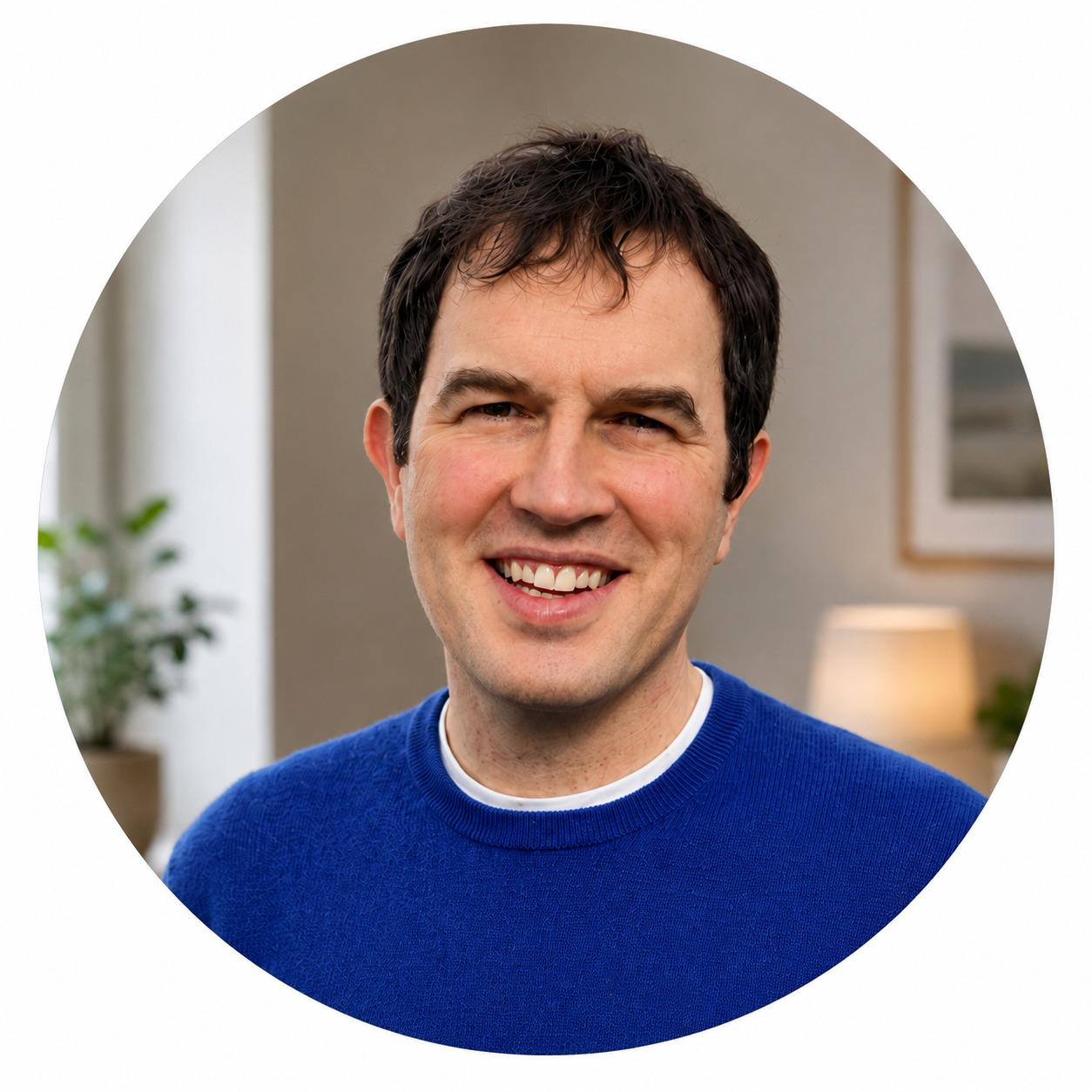
My two-day couples therapy intensive gives one couple dedicated time to step away from everyday life and work closely with me on their relationship. Couples travel to my practice in Moycullen, Co. Galway from across Ireland and internationally, including the UK, Europe, the United States and the Middle East.
For some, it has the feeling of a couples therapy retreat: time away from home, work, children and the usual pressures of life. But the work itself is focused psychotherapy. Two days. One couple. Enough time to understand what has happened between you and begin doing something meaningful about it.
More than communication skills
Couples rarely arrive in my room because they simply don’t know how to communicate.
By the time many couples reach me, there is usually considerably more going on.
Perhaps you have been having versions of the same argument for years. One of you pursues while the other withdraws. Small disagreements become enormous. An affair has changed how you see one another. Sex has disappeared. Resentment has accumulated. You have become excellent parents or housemates but barely recognise yourselves as a couple.
Sometimes one partner is desperately trying to save the relationship while the other has become exhausted and isn’t sure anymore.
Communication matters, of course. But simply teaching a distressed couple to communicate better can miss what is driving the difficulty.
I want to understand the relationship underneath the arguments: what happens between you when things go wrong, what each of you experiences in those moments, what you have learned to protect yourselves from, and how two perfectly understandable responses can combine to create a pattern that neither of you knows how to escape.
That is where the work becomes interesting — and where change can begin.
My approach to couples therapy
I don’t work from a single model of couples therapy.
My approach has developed through specialist training in several of the major contemporary approaches to couples work, including the Gottman Method of Couples Therapy, Relational Life Therapy with Terry Real, and Stan Tatkin’s Psychobiological Approach to Couple Therapy (PACT).
I have completed Level 3 training in the Gottman Method and have had the opportunity to train directly with Dr. John Gottman. His decades of research into what distinguishes relationships that thrive from those that deteriorate remains an important influence on my work.
My training with Terry Real brought another dimension: a willingness to work directly with difficult relational behaviour, accountability, boundaries and the ways in which partners can lose themselves or one another inside a relationship.
PACT with Stan Tatkin adds a particularly useful understanding of attachment, nervous-system regulation and what happens between two people in real time when a relationship begins to feel threatening.
I draw from all of these approaches rather than trying to fit every couple into one theoretical model.
The question is always much simpler: what does this particular couple need?
A body-centred and trauma-informed understanding of relationships
My original psychotherapy training was in biodynamic and integrative psychotherapy, with a strong body-centred foundation. That background continues to influence how I understand couples.
Relationships don’t happen only through words.
We experience them physically and emotionally. A partner’s expression changes and something happens inside us before either person has spoken. A particular tone of voice can produce defensiveness almost instantly. Someone turns away during an argument and the other person’s nervous system registers abandonment. Criticism can feel less like information and more like threat.
This becomes particularly important where trauma, attachment wounds or painful previous experiences are present.
I am trained in EMDR (Eye Movement Desensitisation and Reprocessing) and bring a trauma-informed perspective to my couples work. Where appropriate, this allows us to understand not only the pattern occurring between two people but also some of what is being activated within each person when that pattern begins.
I don’t assume that every relationship difficulty is trauma. Nor do I turn couples therapy into two pieces of individual therapy happening in the same room.
The relationship remains at the centre.
But two people don’t arrive in a relationship without histories. Sometimes the relationship you are struggling with today is touching experiences that began long before you met one another.
Specialist work with complex relationships
My practice is particularly suited to couples where there is more going on than a straightforward communication problem.
I regularly work with couples experiencing high levels of conflict, affairs and betrayal, longstanding resentment, emotional or sexual disconnection, trauma, powerful relationship triggers, ADHD and autism, and relationships approaching separation.
I also work with many intercultural couples and couples whose lives stretch across different countries, cultures or ways of understanding relationships.
Quite often, I am not the first couples therapist a couple has seen.
Previous therapy may have been helpful but not produced sufficient change. Sometimes couples understood their pattern intellectually but continued doing exactly the same thing at home. Sometimes the work never seemed to get beyond the crisis of the week. Sometimes they simply felt they needed something more concentrated.
There is no magic in making therapy longer. The value of an intensive is what the additional time allows us to do.
The couples I work best with
I work best with couples who are ready to engage honestly with what is happening between them. They want not only to resolve the immediate conflict, but also to understand the deeper patterns that keep drawing them back into the same painful places.
You do not need to arrive knowing exactly what you want or how to repair the relationship. You may feel uncertain, hurt or profoundly stuck. What matters is that both partners are willing to participate, look beyond blame and become curious about their own part in the relationship.
I bring considerable experience, structure and directness to the work, but I cannot do the work for you or carry the relationship on your behalf. The strongest work happens when all three of us are actively engaged in the process.
This work is not for every couple, and I do not assume that I am the right therapist for everyone who contacts me. The fit needs to work both ways. Our initial conversations are a two way assessment, giving you an opportunity to experience how I work while allowing me to consider whether my approach is right for you. I want to feel confident that there is a genuine basis for us to do meaningful work together. If I do not believe I am the right therapist, or that the timing or format is appropriate, I will say so clearly and respectfully.
Why I work intensively
Conventional weekly couples therapy has an obvious limitation: time.
A couple arrives carrying a week of tension. We settle into the session, work out what has happened and begin approaching something important. Then the hour is almost over.
Sometimes that is entirely sufficient. For complicated relationships, it often isn’t.
A two-day intensive gives us room to see the relationship as a whole rather than repeatedly treating the latest argument.
We can understand your history together, identify the cycle that has developed between you, slow difficult interactions down, work with the emotional experience underneath them and practise doing something different while we still have time to understand what happened.
There is also something powerful about deliberately stepping out of ordinary life for the relationship.
For two days, the relationship doesn’t have to compete with work, school runs, emails, household tasks and everything else demanding your attention.
It gets the room.
Couples travel to Galway to work with me
My practice is based in Moycullen, just outside Galway in the west of Ireland.
I work primarily with couples from Ireland, but couples also travel internationally to undertake intensive work with me, including from the UK and continental Europe, as well as further afield from the United States, Middle East and other parts of the world.
For couples travelling to Galway, the experience naturally becomes more than simply attending an appointment. You have taken yourselves away from your normal environment and created dedicated time around the relationship.
I don’t provide accommodation or package the work as a conventional residential retreat. Couples choose where they would like to stay and what they want to do with the time around our sessions.
My role is to provide the therapeutic work at the centre of those two days.
I know couples therapy from both sides of the room
My interest in couples therapy isn’t purely professional.
Earlier in my own marriage, my wife and I reached a point where we decided to seek couples therapy ourselves. We worked with a Gottman-trained couples therapist, and the experience was important to us.
I therefore know something about what it is like to sit on the other side of the room and talk honestly with a stranger about a relationship that matters enormously to you.
I also know that seeking couples therapy doesn’t necessarily mean that a relationship has failed.
Sometimes it means two people have recognised that what they are doing isn’t working anymore and are prepared to find another way.
That experience ultimately contributed to my decision to specialise much more deeply in couples work.
Working with Men
Alongside my work with couples, I also work with men and facilitate men’s groups. I am the founder of A Gathering of Men, a transformational weekend retreat for men, creating space for connection, reflection, challenge and personal growth. The retreat brings together men from different backgrounds to step outside everyday life, explore what matters to them and connect more honestly with themselves and with others.
Professional background and training
I am an accredited psychotherapist and a member of the United Kingdom Council for Psychotherapy (UKCP), the Irish Association of Humanistic and Integrative Psychotherapy (IAHIP) and the Irish Council for Psychotherapy (ICP).
My original professional training was in biodynamic and integrative psychotherapy, giving me a strong foundation in humanistic, integrative and body-centred psychotherapy.
I have subsequently undertaken extensive specialist training in couples and trauma work, including:
- Gottman Method Couples Therapy — Level 3, including in-person training with Dr. John Gottman
- Relational Life Therapy, including in-person training with Terry Real
- Psychobiological Approach to Couple Therapy (PACT), developed by Stan Tatkin
- EMDR — Eye Movement Desensitisation and Reprocessing
- Further training and professional development in trauma, attachment, neurodivergence and complex relationship work
Today, my clinical practice is focused exclusively with couples.
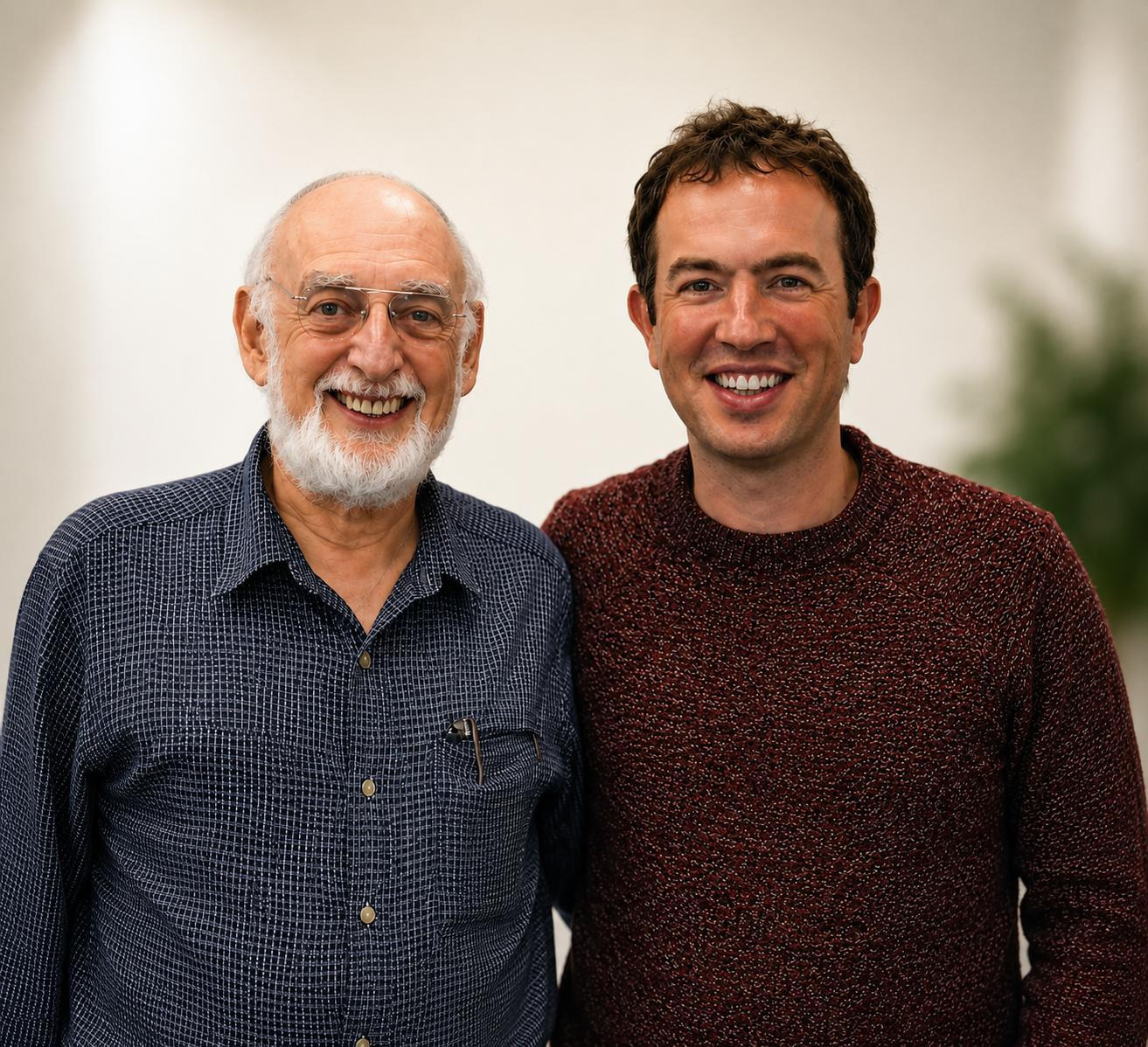
Ruairi training with Dr. John Gottman, Middle East, 2019
Continuing to Learn
I don’t think there is a point at which a therapist finishes learning how to work with relationships.
I continue to undertake advanced training and travel internationally to attend couples therapy conferences and workshops. Part of that is keeping up with developments in the field and emerging research. Just as importantly, it gives me opportunities to spend time with other experienced couples therapists, encounter different ways of thinking and have some of my own assumptions challenged.
Not everything I encounter becomes part of my work. Some ideas deepen what I already understand, some change the way I think about a particular problem, and some are interesting in a conference room but less useful when two people are actually sitting in front of me.
What matters to me is a fairly simple question: does this help me understand couples better, and will it help me do better work with the people sitting in front of me?
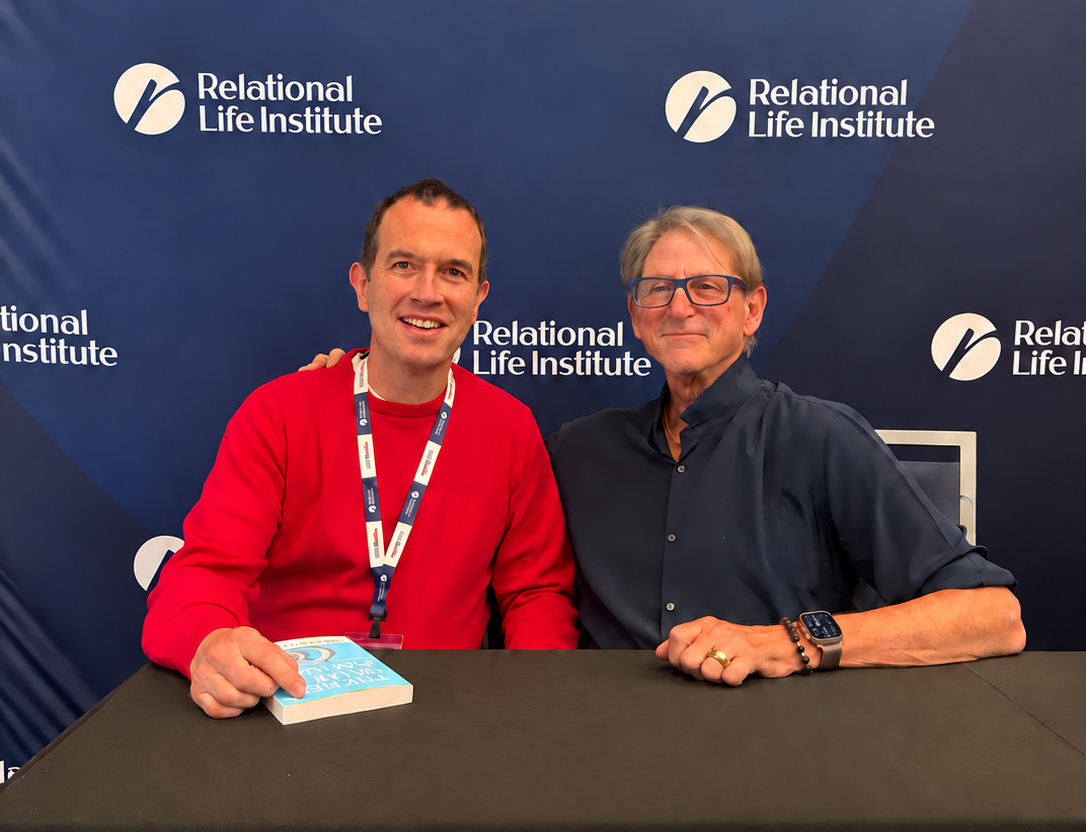
Ruairí and Terry Real at the recent RLT Conference in Montreal
When something needs to change
You don’t need to arrive knowing exactly what is wrong with your relationship.
You may know only that you can’t continue doing what you have been doing.
Perhaps the arguments have become unbearable. Perhaps there has been a betrayal. Perhaps you’ve stopped reaching for one another. Perhaps one of you is considering leaving. Or perhaps you both still love each other and cannot understand why being together has become so difficult.
Couples therapy cannot promise that every relationship will stay together.
What it can offer is somewhere to stop repeating the same pattern long enough to understand it properly.
For couples who have been stuck for a long time, two dedicated days can create something that has become increasingly difficult to find inside the relationship itself:
space to understand one another again, clarity about what needs to change, and the possibility of a different way forward.